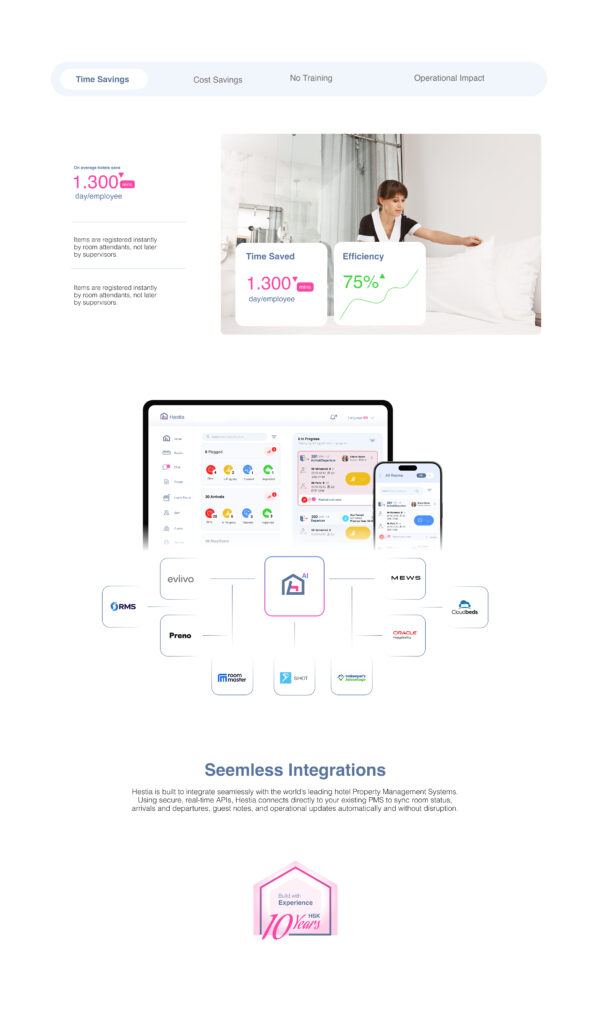
Hestia Hotel Tool
Project
Hestia is a comprehensive hotel management platform built to streamline operations across every department—from boutique hotels to large-scale luxury properties. The project included crafting a cohesive brand identity, designing a versatile logo, and creating intuitive mobile and web experiences focused on operational efficiency, especially for housekeeping management. The goal was to make hotel operations seamless, connected, and perfectly in sync.
Approach & Process
We began with brand strategy, defining Hestia’s positioning: “One Platform, Every Hotel Operation, Perfectly in Sync.” Logo concepts focused on connectivity, efficiency, and hospitality, with a design versatile enough for app icons, dashboards, and marketing. After refinement, a modern, minimalist logo was chosen that communicates trust and operational harmony. For the mobile and web platforms, we mapped core user journeys including housekeeping task assignment, room status tracking, and team communications. Wireframes and prototypes focused on reducing friction for staff and managers. High-fidelity designs prioritized clarity, actionable insights, and responsive layouts for both mobile and desktop use. The development phase ensured seamless implementation of UI, performance optimization, and integration with hotel operational workflows.
Results
The redesigned Hestia platform is currently in the testing phase, being trialed with select hotels to ensure workflows and features meet operational needs. Early feedback indicates that housekeeping and operational tasks are becoming more transparent and easier to manage, with staff responding positively to the intuitive dashboards and real-time notifications. While full deployment metrics are pending, the cohesive brand identity and polished mobile and web interfaces have already strengthened trust and confidence among pilot users, positioning Hestia as a scalable, reliable solution for hotels of all sizes—from boutique properties to large five-star operations.
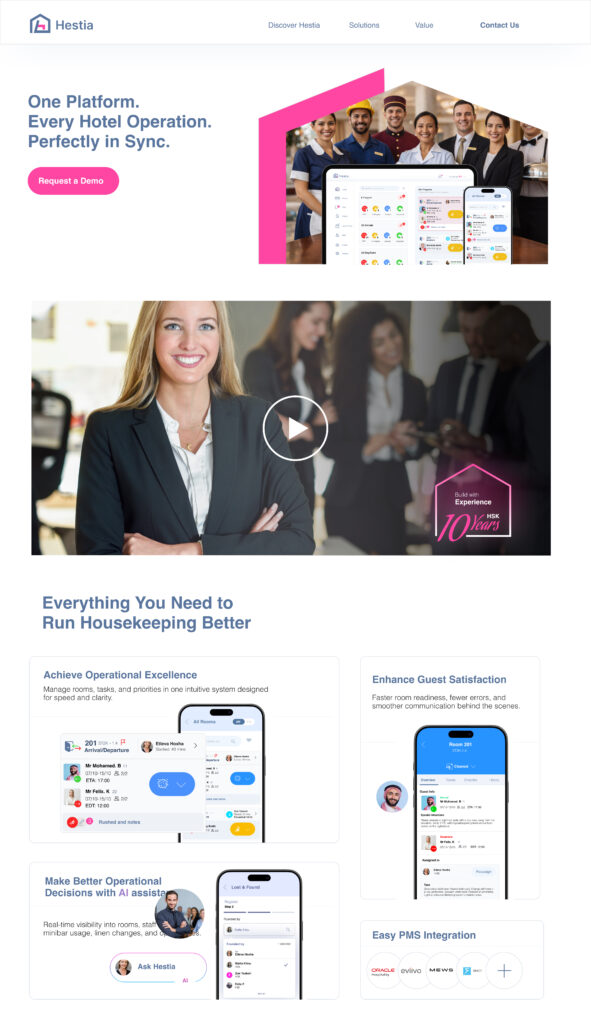
The Hestia project began with a deep dive into the operational realities of hotels, particularly housekeeping and day-to-day staff workflows. We conducted research to understand the challenges faced by hotel teams—many of whom are not highly tech-savvy—and the pressures of managing multiple rooms, departments, and guests in real-time. This insight shaped every aspect of the design, ensuring that the platform would be both intuitive and efficient under fast-paced conditions.
We started by designing the logo and visual identity, focusing on simplicity and recognizability. The logo had to be versatile across mobile, web, and printed materials, while conveying reliability, efficiency, and the sense of a “well-run hotel.” From there, we developed the color palette and UI language, keeping usability at the forefront. Soft neutrals were chosen as base colors to reduce visual fatigue, while functional accent colors were applied strategically: green for completed tasks, amber for in-progress items, and red for urgent actions. This visual coding allowed staff to instantly understand room and task status at a glance, without needing to read detailed text or navigate complex menus.
The UI layouts were designed to be clean and highly legible, with large tap targets for mobile devices and clearly separated content blocks. For example, housekeeping dashboards use card-based designs for each room, so staff can quickly scan room statuses, assign tasks, and mark completions in one glance. Navigation was simplified with a minimal number of menus and clearly labeled buttons, reducing the cognitive load for staff who may be juggling multiple responsibilities simultaneously.
Wireframes and interactive prototypes were tested iteratively with real hotel staff, gathering feedback on clarity, ease of use, and task efficiency. Adjustments were made based on actual workflow observations, such as optimizing the placement of action buttons for mobile devices held in one hand and designing notifications that are visible but not distracting during high-pressure periods.
The final design balances visual simplicity with functional richness, allowing even non-technical staff to confidently complete their tasks, monitor team progress, and communicate across departments without confusion. Every design decision—from typography and iconography to color coding and interactive elements—was made to ensure the platform could be adopted quickly, reduce errors, and improve operational efficiency in fast-paced hotel environments.